Commander Sumit Ghosh
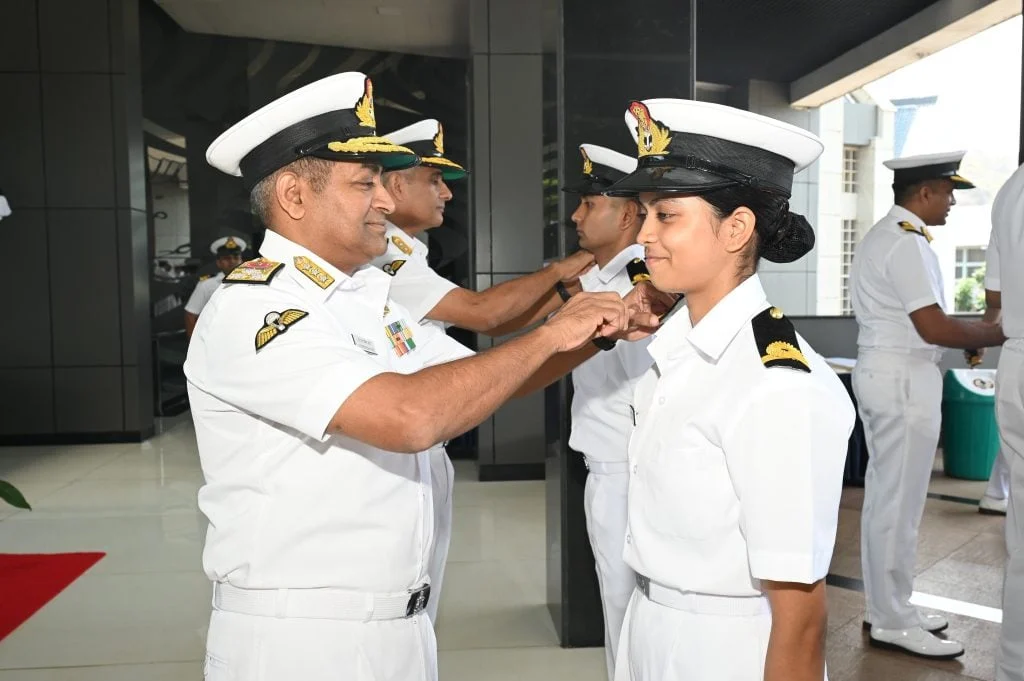
Lucknow: Every year on the fouth day of December, India observes its Navy Day , a moment of national reflection that commemorates not only the heroism of Operation Trident in 1971 Indo-Pak war, but also the evolving maritime vision of a nation increasingly defined by its oceans. Beyond the ceremonial grandeur, Navy Day serves as a strategic reminder: India’s security, economic resilience, and global influence are anchored firmly in the blue expanse that surrounds it.
As the world’s 5th largest economy and a rising Indo-Pacific power, India’s maritime responsibilities have grown manifold. Over 92% of India’s energy imports transit through Indian Ocean routes. In an era of shifting geopolitics, contested waters, and rapid naval militarization across the Indo-Pacific, the Indian Navy stands as the first line of defence, diplomacy, and deterrence.
1. Historical Legacy Shaping the Future- Navy Day marks the successful execution of Operation Trident, when the Indian Navy launched a blistering assault on Karachi harbour, changing the contours of the 1971 war. The operation showcased what foresight, innovation, and decisive action could achieve, even with limited resources. Half a century later, the context may have changed, but the lessons endure. Strategic autonomy, technological mastery, and maritime readiness remain the Navy’s guiding stars as India charts its path toward greater self-reliance.
2. Aatmanirbharta: The New Compass for India’s Maritime Power- In recent years, the Indian Navy has embarked on an ambitious transformation: becoming a force powered by indigenous platforms, indigenous weaponry, and indigenous innovation. This shift towards Aatmanirbharta is not merely symbolic, but it is strategic. India’s naval modernization is increasingly driven by domestic shipyards, design bureaus, and defence innovators. Over 75% of IN’s future projects & platforms are slated to be built within the country. From Aircraft Carriers to advanced Destroyers, Frigates, Submarines, and unmanned underwater vehicles, India is steadily crafting a Navy designed, built and deployed by India alone.
3. Icons of Indigenous Excellence- The commissioning of INS Vikrant, India’s first indigenous aircraft carrier, marked a watershed moment. It demonstrated India’s capability to design and construct complex maritime platforms which is an achievement that only a handful of nations can match. Equally significant are the Kolkata class destroyers, the Shivalik class frigates and the ongoing Project 75 submarines as well as our SSBN program, all of which reflect India’s growing shipbuilding competence. Unmanned maritime drones, indigenous combat systems, and next-generation weapon platforms signal that the Navy’s future lies not just in size, but in smart, technologically driven capabilities.

4. Securing the Indo-Pacific: A Role India Cannot Ignore- As great-power competition intensifies in the Indo-Pacific, India’s naval presence has become indispensable. In recent years, the Navy has expanded its mission based deployments across the key chokepoints, from Gulf of Aden to the Malacca Strait ensuring safe seas and stable trade routes. Humanitarian assistance, disaster relief, anti-piracy operations, and coordinated patrols with friendly nations have positioned the Indian Navy as a Net Security provider in the region. Our slogan of SAGAR – Security and Growth for All in the region makes IN as the most reliable and trusted force in the IOR. A more self-reliant Navy means India can engage globally without strategic dependency or operational constraints.
5. Economic and Industrial Ripple Effects- A strong indigenous Navy fuels more than national security; it catalyzes national development. India’s shipbuilding ecosystem has created thousands of skilled jobs, invigorated public and private shipyards, and spurred research across defence, metallurgy, propulsion, and electronics. The ripple effect extends to startups working on AI-driven naval solutions, robotics, and cyber security birthing a maritime industrial ecosystem poised for global relevance.
6. Vision of Tommorrows Navy – Sailing Ahead- The Indian Navy envisions a future fleet that is leaner, faster, greener and sharper. Autonomous platforms, blue-water submarines, multi-role combatants, and space linked maritime surveillance and domain awareness will define this next era. But at its heart, this vision rests on a simple, powerful idea – Commanding the IOR through own strength.
7. A Day to Celebrate & A Future to Build- As India celebrated its Navy Day 2025 with pride, it honoured not only past bravery but also promises a future anchored in self reliance and robust maritime leadership. An Aatmanirbhar Navy is not just a defence imperative, it is a national aspiration, a symbol of India’s confidence and capability on the global stage. On this day, the nation salutes the men and women in whites and recommits to building the Navy that tomorrow demands. JAI HIND.